Most Likely Causes (Ranked)
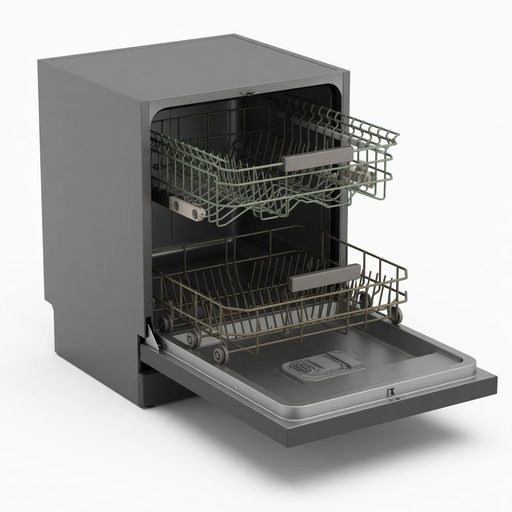
Modern dishwashers (made after ~2010) have a manual-clean filter at the bottom of the tub, replacing the old self-cleaning grinder systems. This filter traps food particles to prevent them from clogging the drain pump and redepositing on dishes. The problem: most people don't know the filter exists, let alone that it needs regular cleaning. After weeks or months of use, trapped food decomposes in warm, wet conditions — producing a smell that ranges from stale to outright rotten.
The rubber gasket that seals the door traps food particles, grease, and moisture in its folds — just like a washing machine gasket. The bottom of the door, where it meets the tub, is especially prone because water and debris pool there. The gasket area also doesn't get fully rinsed during wash cycles, so buildup accumulates over time.
The spray arms have small holes that shoot water during the wash cycle. These holes can become clogged with food particles, mineral deposits, or grease, reducing cleaning effectiveness and creating pockets where bacteria grow. When spray arms are partially clogged, they also don't clean dishes well, meaning more food residue stays in the system.
The drain hose connects your dishwasher to the garbage disposal or sink drain. If the hose has a kink, dip, or improper connection, water can pool in the hose between cycles and become stagnant. The hose should loop up high (near the countertop height) before connecting to the drain — this "high loop" prevents backflow from the sink. Without it, dirty water from the sink can flow back into the dishwasher.
How to Fix It
Clean the Filter
$0This is the #1 fix and takes about 5 minutes. Do this first.
- 1Remove the bottom rack to access the filter. It's usually at the center-bottom of the tub.
- 2Twist or pull the cylindrical filter out (consult your manual if unsure — most twist counter-clockwise and lift). There may be a flat mesh screen underneath as well.
- 3Rinse the filter under hot running water. Scrub with an old toothbrush to remove stuck-on food and grease. For heavy buildup, soak in warm water with a few tablespoons of white vinegar for 10 minutes, then scrub.
- 4Clean the filter housing area in the tub — wipe away any debris or slime you can see in the cavity where the filter sits.
- 5Reinstall the filter, making sure it's seated and locked properly. A loose filter won't catch debris and can cause drain issues.
Clean the Door Gasket and Edges
$0-5Takes about 5 minutes and addresses the second most common odor source.
- 1Mix equal parts white vinegar and water in a spray bottle, or use a damp cloth with a small amount of dish soap.
- 2Wipe the entire door gasket, pulling back the rubber folds to clean inside. Pay special attention to the bottom of the door where water and debris collect.
- 3Clean the top edge of the door and the area where the door meets the tub — this section doesn't get washed during cycles and accumulates grime.
- 4Wipe down the interior walls and edges of the tub, especially around the door frame area.
- 5For stubborn mold or mildew in the gasket, use a paste of baking soda and water, apply it to the affected area, let it sit 15 minutes, then scrub with an old toothbrush.
Run a Cleaning Cycle
$0-8This cleans the interior surfaces, spray arms, and drain path that you can't reach by hand.
- 1Remove all dishes from the dishwasher.
- 2Place 2 cups of white vinegar in a dishwasher-safe bowl or measuring cup on the top rack. Run a hot water cycle (or the sanitize cycle if your model has one). The vinegar degreases surfaces and kills odor-causing bacteria.
- 3After the vinegar cycle, sprinkle 1 cup of baking soda across the bottom of the tub and run a short hot cycle. This neutralizes remaining odors and provides mild abrasive cleaning.
- 4Alternatively, use a commercial dishwasher cleaner like Affresh or Finish Dishwasher Cleaner ($4-8 for a multi-pack). These are formulated to dissolve grease and mineral buildup in the pump, spray arms, and hidden surfaces.
- 5After cleaning, leave the door slightly ajar to air dry. The smell should be significantly improved or gone.
Clean Spray Arms and Check Drain
$0Do this if the filter and gasket cleaning didn't fully resolve the smell.
- 1Remove the spray arms — most twist off or have a retaining clip. Rinse under running water and use a toothpick or thin wire to poke through each spray hole, clearing any debris or mineral buildup.
- 2For mineral deposits (hard water buildup), soak the spray arms in white vinegar for 30 minutes, then clear the holes.
- 3Check under the sink where the dishwasher drain hose connects. The hose should loop up near the countertop before connecting to the disposal or drain (called a "high loop"). If it goes straight or dips down, reposition it to prevent backflow.
- 4Run the garbage disposal before running the dishwasher — the dishwasher typically shares a drain connection with the disposal. A clogged disposal can cause water to back up into the dishwasher.
When to Call a Professional
The dishwasher won't drain and has standing water at the bottom — this indicates a drain pump issue, a clogged hose, or a blocked disposal connection. Standing water stagnates quickly and becomes a major odor source. This may need a service call ($100-250).
You see mold growing inside the tub or on the gasket — visible mold indicates persistent moisture and organic buildup. Clean it thoroughly, but if it keeps returning, there may be a drainage issue keeping the interior too wet between uses.
Dishes come out still dirty or with a smell — this means the dishwasher isn't cleaning effectively, leaving food residue that decomposes. Check the filter, spray arms, and water temperature (should be at least 120°F at the tap).
There's a sewage smell, not just a stale food smell — a sewage smell suggests the drain hose doesn't have a proper high loop or air gap, allowing sewer gas to flow from the drain back into the dishwasher.
How to Prevent It
Clean the filter every 2-4 weeks — takes 2 minutes once you know where it is. Set a monthly reminder. This single habit prevents most dishwasher odor.
Scrape dishes before loading — you don't need to pre-rinse (modern detergents actually work better with some food residue to grab onto), but scrape off large food pieces. The less food in the filter, the less it smells.
Run a monthly cleaning cycle — 2 cups of vinegar on a hot cycle, or a commercial dishwasher cleaner tablet. This dissolves grease buildup in hidden areas.
Leave the door slightly ajar after each cycle — even a 2-inch gap allows air circulation that prevents the damp, enclosed environment bacteria love.
Run the dishwasher regularly — if you only run it once or twice a week, food debris sits wet for days. Running it at least every other day keeps things flushed out.
Why Modern Dishwashers Smell Worse Than Old Ones
If you feel like dishwashers used to be less smelly, you're not wrong. Older dishwashers (pre-2010) had self-cleaning filters with a built-in grinder — essentially a mini garbage disposal that pulverized food particles so they flushed out with the drain water. These were loud but effective at preventing food buildup.
Modern dishwashers switched to manual-clean filters to reduce noise — a selling point when dishwashers are in open-concept kitchens. The trade-off is that food particles now collect in the filter instead of being ground up, and they need to be manually removed. Most manufacturers bury this information in the manual rather than making it obvious to buyers.
The result: millions of dishwashers with filters that have never been cleaned. The good news is that once you know about the filter, maintaining it is trivially easy and keeps the dishwasher odor-free.
Frequently Asked Questions
Every 2-4 weeks is ideal. If you run the dishwasher daily and cook frequently, lean toward every 2 weeks. If you run it less often and scrape dishes well, monthly is fine. The filter clean takes about 2 minutes — remove it, rinse under hot water, scrub with a toothbrush if needed, reinstall. It's much easier than cleaning a smelly dishwasher later.
Only if the interior is stainless steel. Never use bleach in a dishwasher with a plastic interior — it can damage and discolor the plastic. For stainless interiors, you can add 1/2 cup of bleach to the bottom of an empty dishwasher and run a hot cycle. For plastic interiors, stick with white vinegar and baking soda, which are effective and safe for all dishwasher types.
An egg or sulfur smell from the dishwasher usually means food is decomposing in the filter, or there's a drain issue allowing sewer gas to enter. Clean the filter first. If the egg smell persists, check that the drain hose has a proper high loop under the sink and that the garbage disposal connection is clear. Running the disposal before starting the dishwasher also helps prevent odor backflow.
No — modern detergents are designed to work with some food residue (the enzymes need something to grab onto). But you should scrape off large food pieces like bones, rice, and leafy greens. The goal is to reduce what goes into the filter while still giving the detergent material to work with. Pre-rinsing wastes water and can actually make the dishwasher clean less effectively.