
Most Likely Causes (Ranked)
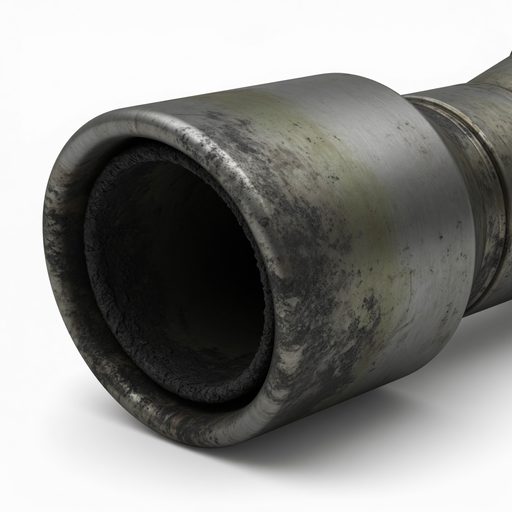
The exhaust manifold bolts directly to the engine and collects exhaust gases from the cylinders. It operates at extreme temperatures (up to 1,200°F) that cause the manifold to expand and contract with every drive cycle. Over time, this thermal cycling cracks the manifold or degrades the gasket between the manifold and the engine head. Because the manifold is located in the engine bay — close to the cabin firewall and HVAC fresh air intake — a leak here easily enters the cabin.
The exhaust system runs the full length of the car's underside. Pipes, the catalytic converter issues, resonator, and muffler are all exposed to road salt, water, and debris. Rust perforations, cracked welds, and loose clamps allow exhaust gases to escape before reaching the tailpipe. If the leak is forward of the cabin (under the front seats or passenger compartment), exhaust easily enters through floor seams and body gaps.
The firewall between the engine bay and the cabin has grommets, seals, and plugs for wiring, plumbing, and HVAC ducts. When these seals deteriorate, shrink, or are disturbed during repairs, they create direct pathways for engine bay air (including exhaust fumes from a minor leak) to enter the cabin. Similarly, rust-through in the floor panels or trunk area can allow exhaust to seep in.
Your car's HVAC draws fresh air from an intake usually located at the base of the windshield, in the cowl area. If there's an exhaust leak anywhere forward of the cabin — manifold, front pipe, catalytic converter issues — the fresh air intake can pull in exhaust fumes and distribute them through every vent in the car. Even a vehicle ahead of you in traffic can cause this, but if it's persistent, it's your own car.
How to Fix It
Immediate Safety Steps
$0Do this right now if you smell exhaust inside the cabin.
- 1Open all windows to maximize ventilation. This dilutes any carbon monoxide that may be present.
- 2Set the HVAC to recirculate mode — this stops the system from pulling in outside air (and exhaust) through the fresh air intake.
- 3If you feel drowsy, lightheaded, or nauseous, pull over immediately and get out of the car. These are signs of carbon monoxide exposure.
- 4Avoid idling in enclosed spaces (garages, parking structures) until the exhaust leak is fixed.
- 5Schedule an exhaust system inspection at your earliest opportunity — this is a same-day priority, not a "when convenient" issue.
Get the Exhaust System Inspected
$50-100 (inspection)A professional inspection is the fastest way to find the exact leak location.
- 1Any muffler shop or general mechanic can inspect the exhaust system. Many offer free visual inspections as a loss-leader for repair work.
- 2The shop will put the car on a lift and inspect the entire exhaust path from manifold to tailpipe, looking for cracks, rust holes, loose connections, and gasket failures.
- 3Some shops use a smoke machine to pressurize the exhaust system with smoke, making even small leaks visible.
- 4Get a written estimate before authorizing repairs. Exhaust work is straightforward but prices vary significantly between shops.
Repair or Replace Exhaust Components
$100-800 depending on the componentOnce the leak is found, the fix depends on what's damaged.
- 1Exhaust manifold gasket replacement: $150-400 (parts $20-50, labor $100-350). This is the most common fix for cold-start ticking and cabin smell.
- 2Cracked exhaust manifold: $200-600 for aftermarket, $400-1,000+ for OEM. Some cracks can be welded ($50-150) as a temporary fix.
- 3Exhaust pipe or muffler section: $100-400 at a muffler shop. Pipe sections are often welded in place. Full muffler replacement is $100-300 for parts and installation.
- 4Catalytic converter: $200-2,500 depending on aftermarket vs. OEM and your state's emissions requirements. This is the most expensive exhaust component.
- 5Exhaust clamps and gaskets: $10-30 each for parts, $50-100 labor per connection. These are the cheapest exhaust repairs.
When to Call a Professional
You feel drowsy, lightheaded, or nauseous while driving — these are carbon monoxide risk poisoning symptoms. Pull over, exit the car, and get fresh air immediately. Do not drive until the exhaust is fixed.
The exhaust smell is constant, not just at startup — a persistent smell indicates a significant leak, not just a minor gasket seepage. Get it inspected the same day.
The exhaust note is much louder than normal — a loud exhaust combined with cabin smell means a substantial section of the exhaust system has failed.
You see exhaust smoke entering the cabin — visible exhaust in the cabin is an immediate safety issue. Stop driving and have the car towed to a shop.
The smell is present in recirculate mode — this means exhaust is entering through body seals, not just the HVAC intake. The leak is close to the cabin and the intrusion path needs to be identified and sealed.
How to Prevent It
Get the exhaust system inspected annually — ask during oil changes or tire rotations. A quick visual check catches rust and deterioration before it becomes a leak.
Address exhaust noises promptly — a new ticking, hissing, or rumbling sound from the exhaust is almost always a developing leak. Fix it before exhaust enters the cabin.
Wash the undercarriage in winter — road salt accelerates exhaust system corrosion. Regular undercarriage washing ($3-5 at a car wash) extends exhaust component life significantly.
Consider stainless steel exhaust components — when replacing parts, stainless steel options cost 20-30% more but last 2-3x longer than standard aluminized steel.
Never idle in a closed garage — even without an exhaust leak, carbon monoxide risk can accumulate to dangerous levels within minutes in an enclosed space.
Carbon Monoxide: The Invisible Danger
Exhaust contains carbon monoxide (CO), a colorless, odorless gas. When you smell exhaust, you're actually detecting other exhaust compounds — unburned hydrocarbons, nitrogen oxides, and sulfur compounds. Carbon monoxide itself has no smell. This means the exhaust smell is your warning signal: if you can smell exhaust, CO is also present.
At low concentrations, CO causes headaches, dizziness, and fatigue — symptoms easily mistaken for tiredness on a long drive. At higher concentrations, it causes confusion, loss of coordination, and unconsciousness. This is especially dangerous while driving because the onset is gradual.
The risk is highest when idling or in stop-and-go traffic (exhaust pools under the car), in cold weather with windows closed, and on long drives where low-level exposure accumulates. Any exhaust smell in the cabin should be addressed promptly — not just because it's unpleasant, but because it's a health hazard.
Frequently Asked Questions
Yes, in extreme cases. Carbon monoxide in exhaust displaces oxygen in your blood. At high concentrations (closed garage, massive leak, windows closed), it can cause unconsciousness and death. In a moving car with a smaller leak, the risk is lower but still real — chronic low-level exposure causes headaches, fatigue, and impaired driving ability. Always keep windows cracked if you smell exhaust, and get the leak fixed immediately.
At idle and low speeds, exhaust gases from a leak don't disperse as quickly — they pool under the car and can be pulled into the cabin through the HVAC fresh air intake or body seams. At highway speed, wind disperses the exhaust before it enters the cabin. This doesn't mean the leak is less serious — it just means driving conditions affect how much exhaust enters the cabin.
Simple fixes: an exhaust clamp is $10-30 in parts. Gasket replacement: $100-400. A pipe section or muffler: $100-400 at a muffler shop. Manifold replacement: $200-1,000. catalytic converter issues: $200-2,500. Most exhaust leaks are fixed for under $400 at a muffler shop. Get an inspection before assuming the worst.
Yes, as a temporary measure. Recirculate mode stops drawing in outside air, which reduces exhaust fumes entering through the HVAC intake. However, this doesn't help if exhaust is entering through body seals. And recirculate mode eventually makes the cabin air stale and increases CO2 levels, so it's not a permanent solution — fix the exhaust leak.