Most Likely Causes (Ranked)
Malassezia is a lipophilic (fat-loving) yeast that lives on everyone's scalp. It feeds on sebum (scalp oil) and produces byproducts including oleic acid and short-chain fatty acids. When it overgrows — from excess oil, warm/humid conditions, or immune changes — these byproducts produce a musty, mildew-like smell.
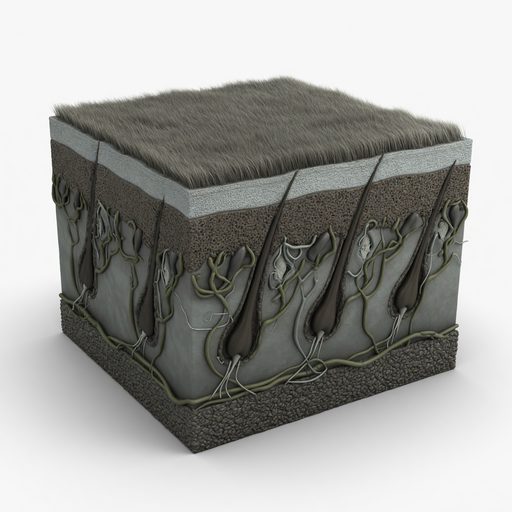
Going to bed with damp hair or tying wet hair up traps moisture against the scalp for hours. This creates conditions nearly identical to how mildew forms on damp fabric — warm, moist, dark, no airflow. Even one night of sleeping on wet hair can produce a noticeable mildew smell.
Oil, dead skin cells, and styling products accumulate on the scalp between washes. This buildup provides a rich food source for Malassezia and other bacteria, accelerating the production of smelly byproducts. Heavy conditioners, oils, and dry shampoo are common culprits.
Androgens increase sebum production. Puberty, pregnancy, PCOS, menopause, and certain medications (testosterone, some birth control pills) can increase scalp oil, feeding Malassezia overgrowth and producing the mildew smell.
A dermatophyte fungal infection of the scalp produces a distinctly musty or mildew smell. More common in children but can affect adults. Produces patchy hair loss, scaly patches, and a persistent moldy odor.
How to Fix It
Use Antifungal Shampoo
$5-15Directly targets Malassezia — the primary cause.
- 1Use a shampoo with ketoconazole (Nizoral, $15), pyrithione zinc (Head & Shoulders, $7), selenium sulfide (Selsun Blue, $8), or tea tree oil.
- 2Lather on the scalp and let it sit for 3-5 minutes before rinsing — contact time is essential.
- 3Use 2-3 times per week for 2-4 weeks, then once weekly for maintenance.
- 4Alternate between two different active ingredients to prevent resistance.
Fully Dry Hair After Washing
$0Critical — eliminates the moisture mold needs.
- 1Blow-dry the scalp (not just the hair) after every wash. Focus on the roots where moisture sits against skin.
- 2Never go to bed with damp hair. If you must wash at night, blow-dry the scalp completely.
- 3Don't tie up wet hair — the trapped moisture accelerates fungal growth.
- 4For very thick hair: consider washing in the morning when you have time to dry properly.
Clarifying Wash
$5-12Remove buildup that feeds the yeast.
- 1Use a clarifying shampoo (Neutrogena Anti-Residue, $8) once every 1-2 weeks to strip product buildup.
- 2Apple cider vinegar rinse (1 part ACV to 3 parts water) after shampooing helps dissolve mineral and product buildup.
- 3Exfoliate the scalp with a scalp scrub or silicone scalp brush during washing.
- 4Reduce heavy styling products, oils, and dry shampoo use.
See a Dermatologist
$100-300If antifungal shampoo doesn't resolve it in 4 weeks.
- 1A dermatologist can do a scalp culture or KOH test to identify the specific fungus.
- 2Prescription-strength ketoconazole shampoo (2%) is more effective than OTC (1%).
- 3Oral antifungal medication (fluconazole, terbinafine) may be needed for tinea capitis.
- 4Hormonal evaluation if excessive sebum is suspected.
When to Call a Professional
Mildew smell + patchy hair loss — possible tinea capitis (fungal infection). See a dermatologist.
Mildew smell + thick, yellow, greasy scales — severe seborrheic dermatitis. OTC treatment may not be sufficient.
Mildew smell in a child + broken hairs — tinea capitis is common in children and requires oral antifungal treatment.
Persistent smell despite antifungal treatment — consider hormonal evaluation or prescription treatment.
How to Prevent It
Wash hair every 1-2 days if your scalp is oily (every 2-3 days for dry scalp).
Always fully dry the scalp after washing — this is the single most important preventive.
Use antifungal shampoo once weekly as maintenance even after the smell resolves.
Minimize heavy hair products that build up on the scalp.
Change pillowcases weekly — they accumulate scalp oil and Malassezia.
Clean hats, headbands, and hair ties regularly — they harbor yeast.
The Malassezia Connection
Malassezia (formerly called Pityrosporum) is a genus of lipophilic yeasts that live on the skin of virtually all humans. Of the 14 known species, M. globosa, M. restricta, and M. sympodialis are the most common on the scalp. These organisms depend on lipids (fats) for growth — they literally cannot survive without sebum.
When Malassezia metabolizes sebum, it produces oleic acid, arachidonic acid, and various short-chain fatty acids including isovaleric acid (sweaty/cheesy smell), acetic acid (vinegar), and propionic acid (sour). The composite of these compounds creates the characteristic 'mildewy' or 'musty' scalp odor. The same organism causes dandruff and seborrheic dermatitis — the smell, the flakes, and the irritation are all products of the same fungal overgrowth.
Frequently Asked Questions
Usually it's an overgrowth of normal scalp yeast (Malassezia), not a true infection. True fungal infections (tinea capitis) are less common but more serious, causing hair loss and scaly patches.
Malassezia feeds continuously on accumulating sebum. After 24-48 hours, enough byproducts have accumulated to produce detectable odor. Washing resets the clock.
Dry shampoo absorbs oil but doesn't remove it or the bacterial/fungal byproducts. Heavy use between washes can actually worsen the smell by trapping decomposing oils against the scalp.
Indirectly — high-sugar and high-fat diets can increase sebum production, feeding Malassezia. Some people notice improvement with dietary changes, but the evidence is mostly anecdotal.
Malassezia overgrowth is not contagious — everyone already has it. True tinea capitis (fungal infection) IS contagious and spreads through shared combs, hats, and pillowcases.