Does this match what you’re noticing?
“Cheesy, sour, or dairy-like smell from the scalp”
Common Causes (Ranked by Likelihood)
Malassezia is a yeast that lives on all human scalps and feeds on sebum (scalp oil). When it overgrows — triggered by hormones, stress, humidity, or an oily scalp — it produces oleic acid and isovaleric acid as metabolic byproducts. Isovaleric acid is specifically the compound responsible for both cheesy smells and sweaty feet odor. This is the same yeast that causes dandruff.
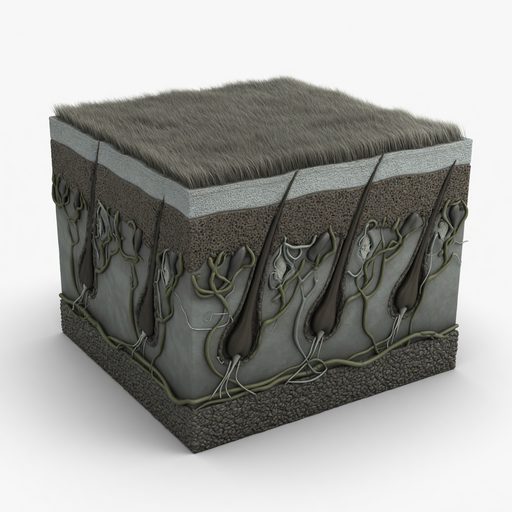
A very oily scalp produces excess sebum that becomes the raw material for bacteria and yeast to metabolize into foul-smelling compounds. Sebum itself has no smell, but within hours to days, the scalp microbiome breaks it down. Androgenic hormones (testosterone derivatives) are the primary driver of sebum production — which is why scalp odor often increases in puberty, with stress, and with hormonal changes.
Hair products — conditioners, styling creams, dry shampoos, oils, and serums — accumulate on the scalp over time if not thoroughly rinsed or washed out. This buildup traps dead skin cells, sweat, and bacteria, creating a fermentation-like environment that produces sour, cheesy, or musty odors. Product buildup itself can also clog follicles and worsen seborrheic dermatitis.
Scalp folliculitis — inflammation of hair follicles from bacterial (usually Staphylococcus) or fungal infection — can produce foul-smelling discharge, crusting, and a cheesy or pus-like odor. It's more common in people who sweat heavily, use tight headwear, or have oily scalps.
Eating large amounts of dairy, fermented foods, or foods with propionic acid (some cheeses, sourdough bread) can lead to these compounds being excreted through scalp sweat glands, temporarily making the scalp smell cheese-like or sour. This is separate from microbial activity on the scalp.
How to Fix It
Antifungal Shampoo Protocol
$8–20The most effective treatment for Malassezia-driven cheesy scalp smell.
- 1Choose one: Nizoral (ketoconazole 1%) is the most effective, followed by Selsun Blue (selenium sulfide 1%), followed by Head & Shoulders (zinc pyrithione).
- 2Wet hair thoroughly. Apply the shampoo directly to the scalp — not just the hair.
- 3Work into a lather and leave on the scalp for 3–5 minutes. Set a timer. Don't just rinse immediately.
- 4Rinse thoroughly. Use 2–3 times per week for the first 4 weeks.
- 5Once the cheesy smell is gone, switch to once weekly for maintenance to prevent recurrence. Malassezia will return if you stop entirely.
- 6If no improvement after 4 weeks of consistent use, see a dermatologist — prescription ketoconazole 2% or ciclopirox may be needed.
Scalp Detox Routine
$10–25Removes product buildup and excess sebum that feeds Malassezia.
- 1Once a week, apply a clarifying shampoo (not regular shampoo) to the scalp. Leave for 2 minutes and rinse.
- 2Follow with a diluted apple cider vinegar rinse (1 tablespoon ACV in 1 cup water) — the acid lowers scalp pH, suppressing yeast and bacteria. Leave for 2 minutes, rinse.
- 3Apply conditioner only from the mid-lengths to ends — never on the scalp.
- 4Dry the scalp thoroughly — Malassezia needs moisture to proliferate. Use a blow dryer on low heat for 2 minutes at the roots.
- 5Avoid heavy oil-based styling products on the scalp — they are food for Malassezia.
When to Call a Professional
Cheesy scalp smell + painful bumps or pustules on the scalp — possible folliculitis or scalp abscess. See a doctor or dermatologist.
Scalp smell + significant hair loss — seborrheic dermatitis can contribute to hair loss if severe; see a dermatologist.
Cheesy smell on the scalp of a baby or young child — could be cradle cap (infantile seborrheic dermatitis). Ask a pediatrician for guidance.
No improvement after 4–6 weeks of antifungal shampoo — see a dermatologist for prescription-strength treatment.
How to Prevent It
Use an antifungal shampoo (zinc pyrithione or ketoconazole) once a week proactively, even when symptoms are controlled.
Apply conditioner and styling products to the hair shaft only — never to the scalp.
Dry the scalp thoroughly after every wash — Malassezia thrives in moisture.
Wash pillowcases weekly — they accumulate scalp oil and microbes that transfer back overnight.
Manage stress levels — cortisol increases sebum production and worsens seborrheic dermatitis.
Frequently Asked Questions
You can have Malassezia overgrowth and the associated cheesy smell without visible dandruff flakes. Dandruff (visible flaking) occurs when Malassezia produces enough oleic acid to trigger an inflammatory skin response and accelerate skin cell turnover. The cheesy smell from isovaleric acid production can occur below the threshold that causes visible flaking.
Most people notice significant improvement within 2–3 applications (about a week). The cheesy smell should be substantially reduced after 2 weeks of consistent use 2–3x per week. Full resolution typically takes 4 weeks. The smell will return if you stop treatment entirely — Malassezia is always present and will rebound.
Not usually — and sometimes it makes it worse. Frequent washing with regular shampoo can strip the scalp's natural acid mantle, paradoxically triggering more sebum production. The key is using an antifungal shampoo rather than more frequent washing with regular shampoo.
No. Malassezia is a normal scalp resident in everyone — it's not an infection you caught from someone else. Seborrheic dermatitis and Malassezia overgrowth are caused by internal factors (sebum production, immune response, hormones) rather than contact with another person.