Does this match what you’re noticing?
“Smell is strongest at one wall, baseboard, or ceiling corner, often below a bathroom, kitchen, or roof valley”
Where the Smell Is Coming From (Ranked)
EPA's hidden-mold list is the back side of drywall, wallpaper, or paneling, the top of ceiling tiles, walls around leaking or condensing pipes, pipe chases, and walls behind furniture, and it says "you may suspect hidden mold if a building smells moldy, but you cannot see the source"23. You smell it through an intact painted wall because mVOCs are gases: a 2005 review notes that vinyl wallpaper and polyethylene sheeting block spores but "do not prevent the diffusion of MVOCs," and that mVOCs can reveal fungi "growing in poorly accessible and invisible areas, for example behind a wall paper"8. The trigger is water that sat too long. EPA says wet materials dried within 24–48 hours usually will not grow mold, so a leak that went unnoticed longer than that is your suspect23. Do not cut in yet. EPA warns that pulling wallpaper "can lead to a massive release of spores" if mold is growing on its underside, that disturbing hidden mold can spread it through the building, and that you may want to hire an experienced professional when you believe hidden mold is present234.
EPA's air-duct guide says to "pay particular attention to cooling coils, which are designed to remove water from the air," to make sure the condensate pan drains, and that standing water or debris in the system "indicates a problem requiring immediate attention"5. The signature: musty when the blower runs, fading when it is off. EPA's mold course explains that moisture collects in ventilation systems from poor condensate pan drainage or high humidity in the ducts, and that "a contaminated ventilation system may spread mold spores throughout the building," so one coil can make every room smell4. Many parts of the system "may not be accessible for a visible inspection"5. Safety rule first: EPA says "do not run the HVAC system if you know or suspect that it is contaminated with mold"23. Duct liner or insulation that is wet or visibly moldy "cannot be effectively cleaned and should be removed or replaced" by a qualified contractor5. Duct cleaning itself "has never been shown to actually prevent health problems"; the useful routine is cleaning drain pans and coils5.
EPA names basements among the rooms "that are always or often damp" where household mold is common, and lists crawl spaces, pipe chases, and utility tunnels as hidden-mold sites4. Below grade, the water comes up from the soil and in through the foundation. NC State Extension's checklist says a crawl space should have "at a minimum" a 6–8 mil plastic vapor barrier covering the soil, and tells you to check foundation cracks inside and out, the sump pump, and the floor drain14. Humidity does the rest: EPA says to keep indoor relative humidity below 60 percent, ideally 30–50, and NC State says to run a dehumidifier when it reads above 60 and to empty and clean its pan regularly214. Inspectors quoted by Bob Vila name basements and attics as the usual trouble spots because temperature swings there cause condensation11. One caution from the research: mVOC levels may "indicate the presence of excess moisture in building materials rather than exclusive fungal growth," so a basement that smells damp has a moisture problem to fix whether or not you ever find a visible colony8.
EPA lists "the underside of carpets and pads" as a hidden-mold location and says absorbent materials like carpet "may have to be thrown away if they become moldy"2. The mechanism is simple: when carpet gets wet, "carpet backing or padding must be dried in addition to the carpet or mold will likely result"4. It does not take a flood. In a 2021 chamber study published in Microbiome, carpet containing house dust began growing fungi between 75 and 80 percent equilibrium relative humidity, lower than the 85–95 percent drywall needed, and the dust-laden carpet emitted 1-octen-3-ol, which the authors call a probable mVOC10. The same study explains why your nose finds it first: odor thresholds for these compounds are "one to four orders of magnitude lower" than the levels that irritate10. Typical suspects are wall-to-wall carpet on a basement slab, carpet under a window or sliding door that leaks, and a spill or pet accident where only the surface was dried. NC State's checklist is blunt: lift a carpet corner and look at the underside14.
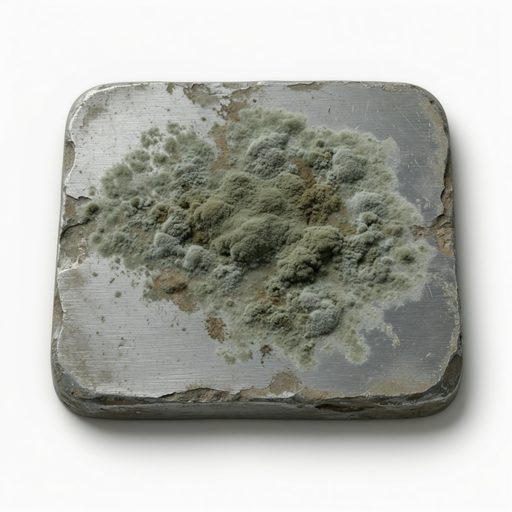
Bathrooms are EPA's first example of rooms "that are always or often damp"4. Spots on the surface of caulk, grout, or the ceiling are the visible version; the smelly version lives behind failed caulk at the tub or shower, where water gets into the wall. NC State says to inspect the caulk, grout, and tiles for damage and repair them, and to check for plumbing leaks around tubs and showers14. Then test the fan. NC State's method: hold a single sheet of toilet paper to the running fan; if it stays put, the fan pulls, and the fan must vent outdoors, not into the attic or another interior space14. EPA says to run the bathroom fan or open the window when showering, and not to paint or caulk over moldy surfaces: clean and dry first2. CDC's prevention list likewise includes "ventilating showers and cooking areas"7. Surface mold you can see and scrub, under about 10 square feet, is a do-it-yourself job with detergent and water2.
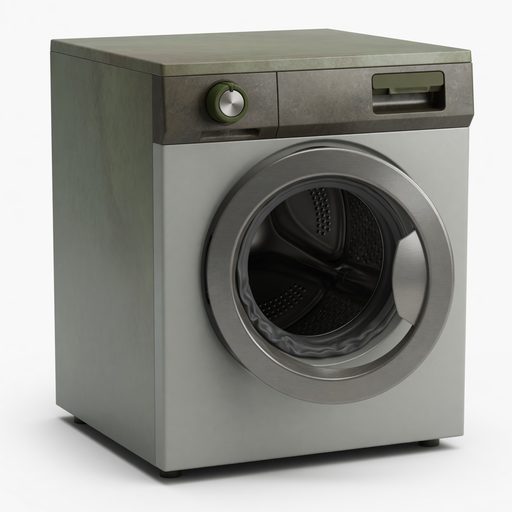
Whirlpool's own guidance says the rubber door gasket "is prone to trapping moisture, which can create the perfect breeding ground for mold and mildew," and that "residues from fabric softener and detergent can accumulate on the gasket" and feed the odor and the black gunk in its folds15. The smell sits in the laundry room and on the clothes, which is how it gets mistaken for a hidden house problem. Whirlpool's fix: check the gasket folds for lint, coins, and socks, wipe with an appliance-safe cleaner, and for mold mix 3/4 cup liquid chlorine bleach in 1 gallon of warm water, let it sit about 5 minutes, scrub, rinse with a cloth dampened in warm water, towel dry, and leave the door open15. Prevention is the habit: wipe the gasket after each cycle, deep clean roughly once a month or every 30 cycles, use only HE detergent in an HE washer because too much or the wrong detergent leaves residue, remove wet laundry promptly, and run the Clean Washer cycle with a cleaner tablet every 30 washes15.
How to Fix It
Follow your nose: a room-by-room search with a flashlight
$0Do this first; EPA says the most important equipment in a mold investigation is "your own eyes and nose, although a good flashlight may help"4.
- 1Rule out the impostors: wet laundry left in the washer, expired food, pet bedding, a leak under a sink, or an HVAC problem, which Bob Vila's inspectors say routinely get blamed on hidden mold11.
- 2Walk the house with the HVAC off, then again after the blower has run for a while. A smell that arrives with the blower points to the coil, condensate pan, or ducts45.
- 3Start in the rooms that are always or often damp: bathrooms, laundry and utility rooms, the basement, and kitchen cabinets under sinks414. Pull furniture away from exterior walls; EPA lists walls behind furniture as a hidden-mold spot3.
- 4Kneel and smell at floor level, lift a carpet corner, open the cabinet under each sink, and shine the flashlight on the top side of any dropped ceiling tile214.
- 5Look for condensation on windows, walls, and cold-water pipes; EPA says to act quickly to dry the surface and reduce the moisture source2.
- 6If the smell is strongest at a wall with nothing visible, stop there. Mark the spot and move to the moisture meter instead of cutting: EPA warns that disturbing hidden mold can spread it, and that stripping wallpaper over mold can release a massive amount of spores24.
Confirm with a moisture meter and a humidity gauge
$0-$100Use this when the smell has a general location but nothing is visible; it tells you whether a wall or floor is wet enough to be growing mold.
- 1Get a pinless or combo moisture meter (This Old House puts combo units at under $100) and a humidity gauge (EPA notes models under $50)312.
- 2Take a baseline first: several readings on a wall you know is dry in the same room, what Delmhorst's manual calls a "dry standard"13.
- 3Scan the suspect area low on the wall, around door jambs, and at plumbing and electrical fixtures, holding the meter flat and steady for a few seconds per reading1213.
- 4Read comparatively, not as a percentage. Green Building Advisor found a metal corner bead behind drywall sent one meter to 78 and another to 35 against a baseline of 8 with no moisture present, and argues the "percent" on a pinless meter is only a relative scale; look for a pattern of high readings backed by staining, softness, or odor13. This Old House publishes ranges instead (6–9 normal, 15–20 investigate, above 20 very high); treat those as a rough guide rather than a verdict, since the two sources disagree12.
- 5Hang the humidity gauge where the smell is worst. EPA's target is below 60 percent relative humidity, ideally 30–50; above 60, NC State says to run a dehumidifier214.
- 6A wet reading behind an intact wall means hidden mold is likely. EPA's advice at that point is caution and, if you believe hidden mold is present, considering an experienced professional23.
Clean a small visible patch yourself (under 10 square feet)
VariesUse this once you have found the growth and it covers less than about 10 square feet, roughly a 3 ft by 3 ft patch, which EPA says most people can handle themselves2.
- 1Fix the water first. EPA: "If the conditions causing the mold growth in the first place are not corrected, mold growth will recur"5.
- 2Gear up: EPA recommends an N-95 respirator, gloves that reach the middle of the forearm, and goggles without ventilation holes; for a patch under 10 square feet no containment is required23.
- 3Scrub mold off hard surfaces with detergent and water, and dry completely2. Do not paint or caulk over moldy surfaces; clean and dry them first2.
- 4Throw out porous things that got moldy. EPA says absorbent materials such as ceiling tiles and carpet may have to be discarded2.
- 5If you use a disinfectant or biocide, ventilate the area and exhaust the air outdoors2. You do not need to know the species: CDC says it is generally not necessary to identify the mold growing in a residence, and whatever type it is, you should arrange for its removal7.
- 6Dry everything within 24–48 hours and check back in a few days. EPA's standard for a finished job is that visible mold and moldy odors should not be present23.
What a professional job should look like (over 10 sq ft or HVAC)
VariesUse this when the growth is large, inside the HVAC system, or behind surfaces you would have to open up.
- 1Expect containment. EPA's remediation guide calls for limited containment (a single layer of 6-mil fire-retardant polyethylene) and HEPA-filter respirators from 10 to 100 square feet, and full containment with double polyethylene and an airlock above 100 square feet3.
- 2For HVAC, do not run the system until it is cleared, and expect wet or moldy fiberglass duct insulation to be removed and replaced by a qualified heating and cooling contractor, not cleaned25.
- 3Ask the contractor to show you the mold. EPA says many parts of a heating and cooling system are not visible for inspection and that something that looks like mold "may require laboratory analysis for final confirmation"5.
- 4Insist the moisture source be identified and fixed as part of the job; EPA says mold growth will recur otherwise5.
- 5Skip routine air testing. EPA says sampling is unnecessary when mold is visible, is only worth considering when the source is unclear or there are health concerns, and "cannot be used to check a building's compliance with Federal mold standards" because none exist3.
- 6Judge the result by EPA's standard: no visible mold and no moldy odor when the work is done3.
When to Call a Professional
The growth covers more than about 10 square feet (bigger than a 3 ft by 3 ft patch): EPA's guide for larger jobs calls for 6-mil poly containment and HEPA respirators from 10 to 100 square feet, and full containment with an airlock above 10023.
The smell tracks the HVAC system: do not run the system if you know or suspect it is contaminated, and wet or moldy duct insulation has to be removed and replaced by a qualified heating and cooling contractor25.
You smell mold but cannot find it after the meter search: EPA says investigating hidden mold requires caution because disturbing it can spread mold through the building, and recommends considering an experienced professional234.
The water was sewage or floodwater: EPA says to call a professional with experience cleaning and fixing buildings damaged by contaminated water2.
How to Prevent It
Keep indoor relative humidity below 60 percent, ideally 30–50, and dry condensation on windows, walls, or pipes as soon as you see it; EPA notes humidity gauges are available for under $5023.
Dry anything that gets wet within 24–48 hours, including carpet pad and backing, not just the surface24.
Run the bathroom fan or open a window when showering, and make sure the fan vents outdoors; test it with a single sheet of toilet paper held to the grille214.
Have the heating and cooling system serviced, ask the technician to clean the cooling coils and drain pans, and make sure the condensate pan drains514.
Extend downspouts 6–10 feet from the foundation, grade soil to slope away from the house, and cover crawl-space soil with a 6–8 mil vapor barrier14.
Leave the front-load washer door open between loads, wipe the gasket after each cycle, and deep clean it about once a month15.
Frequently Asked Questions
Yes, and it is common. EPA says you may suspect hidden mold when a building smells moldy but you cannot see the source, and lists the back of drywall, wallpaper, and paneling, the top of ceiling tiles, the underside of carpet and pad, inside walls around pipes, and inside ductwork as the places it hides2. The smell gets out because mVOCs are gases: a 2005 review notes that vinyl wallpaper and polyethylene sheeting block spores but "do not prevent the diffusion of MVOCs"8. Use a moisture meter to find the wet area before opening anything, since EPA warns that disturbing hidden mold can spread it34.
Not in a way you can use. Inspectors quoted by Bob Vila describe black mold as smelling like a musty basement or rotting leaves, but the same article says odors vary with moisture, food source, and life stage, and that the average homeowner cannot reliably tell molds apart by smell11. CDC says it is generally not necessary to identify the species of mold growing in a residence; no matter what type is present, you should arrange for its removal7. EPA's cleanup rules do not change by species either, only by the size of the patch and the moisture source23.
Usually no. CDC does not recommend or perform routine sampling for molds and says you cannot rely on sampling and culturing to know your health risk; EPA says sampling is unnecessary when mold is visible and cannot be used to check compliance with federal standards because there are none36. Tests that measure mVOCs in the air have not held up as a shortcut either: a 2010 study of homes measuring eight so-called microbial VOCs found "visible mold growth and moldy odor were not related with the level of MVOC," and the 2005 review concluded "no single VOC seems to be a reliable indicator" of contamination89. EPA reserves sampling for cases where the source is unclear or there are health concerns, done by a professional with sampling experience3.
EPA says the health effects of mVOCs are largely unknown, though exposure has been linked to headaches, nasal irritation, dizziness, fatigue, and nausea, and more research is needed1. The mold behind the smell is the better-documented problem: CDC says damp and moldy environments may cause nasal stuffiness, throat irritation, coughing or wheezing, eye irritation, or skin irritation in sensitive people, or no effects at all, with more severe reactions in people with mold allergies and possible lung infections in immune-compromised people and those with chronic lung illness6. CDC also notes a link between mold and memory loss or lethargy has not been proven6. If you can see or smell mold, CDC says a health risk may be present, so treat the smell as a reason to find and fix the source6.
Because the cooling coil is the wettest spot in the house by design: EPA says coils "are designed to remove water from the air," and if the condensate pan does not drain, water stands there5. EPA's mold course adds that a contaminated ventilation system can spread mold spores throughout the building, which is why one wet coil makes every room smell when the blower starts4. EPA's instruction is not to run the system if you know or suspect it is contaminated, and to have the coils and drain pans cleaned rather than paying for routine duct cleaning, which EPA says has never been shown to prevent health problems25.
They mask it. Bob Vila's inspectors put it plainly: "No number of open windows or amount of air freshener can fully remove the odor created by mold," and the mold keeps spreading while you cover the scent11. EPA's position is that the key to mold control is moisture control, and that a moldy odor is a sign mold is growing and should be investigated, not deodorized1. EPA's definition of a finished cleanup is that visible mold and moldy odors are no longer present23.
It can be either, and the fix is the same. Building scientists caution that mVOC levels may "indicate the presence of excess moisture in building materials rather than exclusive fungal growth," and that building materials emit some of the same compounds89. NC State Extension's rule: anywhere you smell a musty, earthy odor or see excess moisture, there is the potential for mold growth14. EPA says materials dried within 24–48 hours usually will not grow mold, so a damp smell is your window to dry the area and bring humidity under 60 percent before a colony establishes23.
Sources
Every factual claim above comes from one of these. Updated November 2026.
- What does mold smell like? — U.S. Environmental Protection Agency
- A Brief Guide to Mold, Moisture and Your Home (EPA 402-K-02-003, reprinted 2012) — U.S. Environmental Protection Agency
- Mold Remediation in Schools and Commercial Buildings (EPA 402-K-01-001) — U.S. Environmental Protection Agency
- Mold Course Chapter 3: Finding Mold and Moisture — U.S. Environmental Protection Agency (January 2025 snapshot)
- Should You Have the Air Ducts in Your Home Cleaned? — U.S. Environmental Protection Agency
- Facts about Mold and Dampness (archived copy, UNT Libraries web archive) — Centers for Disease Control and Prevention
- Mold: Questions and Answers (archived FAQ, UNT Libraries web archive) — Centers for Disease Control and Prevention
- Microbial volatile organic compounds as indicators of fungi. Can an electronic nose detect fungi in indoor environments? (Building and Environment 40(6):824–831, 2005) — Kuske, Romain and Nicolas; postprint hosted on hackaday.io
- Relationship between selected indoor volatile organic compounds, so-called microbial VOC, and the prevalence of mucous membrane symptoms in single family homes (Science of the Total Environment 408(10):2208–2215, 2010) — Araki, Kawai, Eitaki et al.; Hokkaido University repository
- Microbial growth and volatile organic compound (VOC) emissions from carpet and drywall under elevated relative humidity conditions (Microbiome 9:209, 2021) — Haines, Hall, Marciniak, Misztal, Goldstein, Adams and Dannemiller; Springer Nature
- What Does Mold Actually Smell Like? — Bob Vila (Dan Casarella and Evelyn Auer, updated May 9, 2024)
- How To Use a Moisture Meter — This Old House (Ross Trethewey, updated May 22, 2026)
- Pinless Moisture Meters — Green Building Advisor (Peter Yost, 2018)
- Mold and Moisture Checklist — NC State Extension (Sarah Kirby, April 2022; adapted from University of Georgia Extension)
- How to Clean the Gasket on a Front Load Washer — Whirlpool
Cite or link to this guide
Citation (APA)
Link (HTML)
Free to quote with a link back. Writers, teachers and landlords: the chart at Smells You Should Never Ignore is free to embed.
Related smells
Other guides in Home & House and smells that share a cause.