Most Likely Causes (Ranked)
The AC evaporator is a heat exchanger behind the dashboard that removes heat from cabin air by passing it over cold refrigerant coils. As warm air contacts these cold surfaces, moisture condenses — just like condensation forms on a cold drink. This moisture normally drains out through a small drain tube under the car. However, the evaporator housing stays damp enough to support mold, mildew, and bacterial growth on the evaporator fins, drain pan, and surrounding foam insulation. The most common organisms are Cladosporium and Aspergillus mold species, along with various bacteria. When the fan blows over these colonized surfaces, it disperses the musty, dog-like smell throughout the cabin. This is why the smell is strongest when the AC first turns on and often improves or changes as the system runs.
Car carpets that get wet — from a leaking door seal, failed window weatherstrip, cracked windshield seal, clogged sunroof drain, or AC condensate drain backup — develop mold and bacteria within 24-48 hours in warm conditions. Wet car carpet is among the worst environments for mold because it's dark, poorly ventilated, and in contact with the unventilated carpet padding underneath. The wet dog smell of actively growing mold in damp carpet is indistinguishable from actual wet dog to most people. Leaks can be surprisingly small and still create enough moisture to support significant mold growth.
Dog (and cat) dander, saliva, and anal gland secretions embed deeply into fabric upholstery and carpet fibers. These organic compounds are metabolized by bacteria living in the fabric, producing volatile byproducts that smell like wet dog — especially when moisture activates them. The smell is often dormant or mild when conditions are dry but intensifies dramatically when the car gets wet (rain, humid weather, or car washing) because moisture reactivates the bacterial metabolism. A car that had dogs previously, or was purchased used from someone with dogs, can retain this smell for years without treatment.
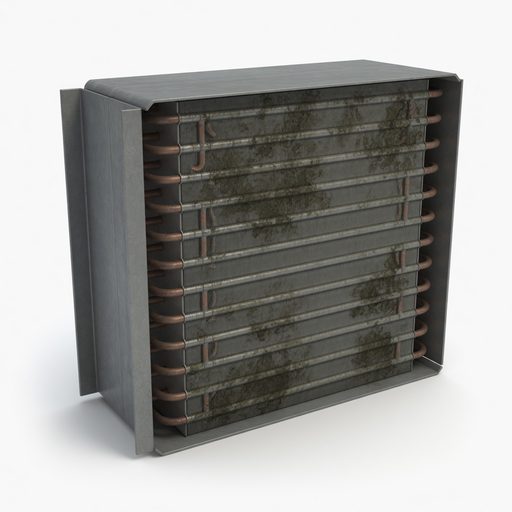
The AC condensate drain tube — a small rubber hose that exits under the car to drain evaporator moisture — can become clogged with debris, dirt, or mold growth. When it clogs, condensate water backs up into the drain pan and eventually overflows into the carpet under the passenger feet or dash. This creates a persistently wet area that develops a strong mold and bacteria smell within days. A clogged AC drain is responsible for both the wet carpet problem and increased evaporator mold simultaneously.
An actual wet dog in a car for even 20-30 minutes can leave residual odor for days to weeks. Dog odor when wet is caused by 2-nonenal and other volatile compounds released as moisture activates microbes living in the dog's coat. These compounds transfer to seat fabric, carpet, and headliner during the ride, and moisture in the environment reactivates the smell repeatedly.
How to Fix It
Treat the AC Evaporator
$15-40 DIY / $75-150 professionalThe most effective fix for vent-sourced wet dog smell.
- 1Purchase an AC evaporator treatment spray (Lysol, Chemical Guys Odor Eliminator, or specialty AC coil cleaner — look for products that can be sprayed into the fresh air intake). These are widely available at auto parts stores.
- 2Locate the fresh air intake — typically at the base of the windshield on the passenger side (check your manual). This is where the AC system draws outside air.
- 3Set the HVAC to fresh air mode (not recirculate), fan on high, AC off.
- 4Spray the evaporator cleaner generously into the fresh air intake while the fan is running — this distributes the cleaner over the evaporator fins and drain pan.
- 5Turn the AC on (without heat) for 10 minutes to dry the evaporator after treatment.
- 6For a thorough professional cleaning: HVAC technicians can remove the evaporator box or apply foam-based cleaners for $75-150 — this is more effective than DIY for severe cases.
- 7Going forward: at the end of every AC season, run the fan without AC for 5-10 minutes before parking. This dries the evaporator and prevents mold from establishing.
Find and Fix the Water Leak
Free (DIY inspection) to $50-300 (repair)If carpet is damp, fix the source before cleaning.
- 1Feel the carpet and floor mats in each footwell — identify any damp areas. Check under the floor mats too, as mats can conceal moisture.
- 2For passenger footwell dampness: check the AC condensate drain first. Locate the drain tube exit under the car (near the firewall) and confirm water drips from it when the AC runs. If no water comes out, the drain is clogged. Clear it with a thin wire or compressed air.
- 3For other areas: systematically check door weatherstripping (close the door on a piece of paper — it should grip firmly). Check sunroof drains (pour a small amount of water into the sunroof drain channels and verify it exits under the car). Check the windshield seal visually for cracks.
- 4Weatherstrip replacement: $20-60 per door at auto parts stores, DIY installation.
- 5Sunroof drain clearing: use a thin wire or compressed air; locate drain tubes in the sunroof corners and clear blockages. Free DIY.
Deep Clean and Deodorize Carpet and Upholstery
$20-80 DIY / $150-300 professional detailRequired for pet odor and mold-in-carpet smell.
- 1Remove all floor mats and clean separately — machine wash if possible, or scrub with enzyme cleaner and allow to dry fully in the sun.
- 2Vacuum all carpet and upholstery thoroughly with a wet/dry vac if damp areas exist.
- 3Apply an enzyme-based odor eliminator (Rocco & Roxie, Nature's Miracle, Zero Odor) to all affected surfaces. Enzyme cleaners specifically break down the organic compounds in pet odor and mold VOCs — they don't just mask.
- 4Allow to dry completely with car windows open or a fan directing air into the car. This is critical — enzymes need to dry to fully neutralize odors.
- 5For stubborn odors: an ozone generator treatment ($30-50 to rent at some hardware stores or $100-150 from a professional detailer) oxidizes and destroys organic odor compounds. Use with all windows closed, doors sealed; leave for 2-4 hours; then ventilate thoroughly before occupying.
- 6Baking soda sprinkled on carpet overnight then vacuumed in the morning absorbs residual odors after the enzyme treatment.
When to Call a Professional
The carpet is consistently wet despite no obvious leak — an AC drain clog can allow significant water accumulation. If left untreated, it can damage electronics under the carpet and cause structural rust.
You or passengers experience allergy symptoms in the car — mold in the AC system disperses spores throughout the cabin. Those with mold allergies or asthma should prioritize evaporator treatment.
The smell persists despite multiple cleaning attempts — if the water source hasn't been fixed, cleaning is futile. Confirm the leak is resolved before investing in cleaning.
How to Prevent It
Run the fan without AC for 5 minutes before parking — this dries the evaporator and prevents mold establishment. Do this especially in humid weather.
Replace the cabin air filter annually — a dirty filter restricts airflow and increases evaporator moisture retention.
Use waterproof seat covers when transporting wet dogs — this prevents pet compounds from embedding in the upholstery.
Keep car windows cracked in dry weather — improves ventilation and reduces humidity that allows mold to thrive.
Inspect door seals and sunroof drains annually — catching a small leak before it saturates carpet prevents a much more difficult problem.
Why Wet Dog Smell Is Hard to Eliminate
The organic compounds responsible for wet dog smell — particularly 2-nonenal, various short-chain aldehydes, and microbial VOCs — share two properties that make them persistent in car interiors: they're lipophilic (bind to fats and oils in fabric fibers) and they're reactivated by moisture. This means that treating the surface alone often provides only temporary improvement because moisture from humidity, rain, or car washing reactivates the smell from deeply embedded compounds.
This is why enzyme cleaners are specifically recommended over deodorizers and air fresheners. Enzymes break down the organic compounds chemically — eliminating them rather than covering them. Without enzyme treatment, the compounds remain in the fabric and re-emerge every time conditions are right.
For the most persistent cases, professional detailers use a combination of hot water extraction (removes deeply embedded compounds mechanically), enzyme treatment, and ozone generation to achieve complete elimination. A good professional detail shop will guarantee their work for these types of odors.
Frequently Asked Questions
The AC evaporator — the component that cools cabin air — accumulates moisture and develops mold and bacteria. When the fan blows over these surfaces, it disperses musty, organic odor through the vents. This is very common and treatable with evaporator cleaner spray applied through the fresh air intake. Running the fan without AC for 5 minutes before parking prevents the problem from recurring.
Enzyme-based cleaners are the only approach that works permanently. Regular cleaners and air fresheners mask the smell temporarily. Apply enzyme cleaner generously to all affected fabric, work it in, and let it dry completely. For leather seats, use an enzyme cleaner safe for leather, then condition after it dries. For severe cases, professional hot water extraction followed by enzyme treatment is the most reliable approach.
Rain increases humidity inside the car if windows or seals leak, and high ambient humidity activates odor compounds embedded in upholstery and carpet. Even if the car isn't directly wet, damp air reactivates dried organic compounds that smell dormant in dry conditions. This 'rain activation' of odors is a reliable indicator that there are embedded organic compounds — pet dander, mold, or both — in the car surfaces that need enzyme treatment.
Febreze provides temporary odor masking for 30 minutes to a few hours but doesn't address the organic compounds causing the smell. The cyclodextrin molecules in Febreze trap some odor molecules, but they don't break down or remove the compounds — they return as conditions change. Use enzyme cleaners for actual elimination, and Febreze only as a temporary freshener between treatments.