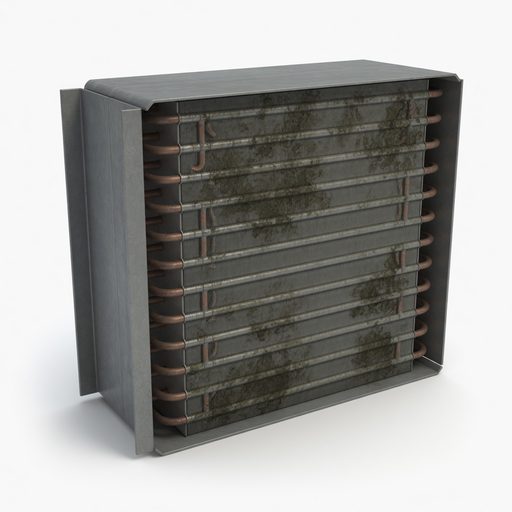
Most Likely Causes (Ranked)
The evaporator coil is constantly wet from condensation during cooling. Dust, pollen, and organic particles stick to this wet surface, creating a perfect food source for bacteria and mold. Species like Mycobacterium and various fungi colonize the coil and produce volatile compounds that smell like dirty feet. This is the cause in 90%+ of cases.
The condensate drain pan and line remove moisture from the evaporator coil. When blocked, water pools and stagnates, growing bacteria and algae that produce the foot-odor-like smell. This compounds with coil contamination.
An extremely dirty air filter doesn't cause the foot smell directly, but it restricts airflow across the coil, allowing more moisture to accumulate and creating colder, wetter conditions that accelerate bacterial growth on the coil.
Over time, dust, moisture, and organic matter accumulate in ductwork, particularly in runs that are poorly insulated or in unconditioned spaces like attics. These can harbor the same bacteria that cause Dirty Sock Syndrome.
How to Fix It
Clean the Evaporator Coil
$15-30 DIY / $150-300 proThe primary fix — addresses the root cause.
- 1Turn off the HVAC system at the thermostat and breaker.
- 2Access the evaporator coil (usually behind an access panel on the indoor unit).
- 3Spray the coil with a foaming coil cleaner (Nu-Calgon Evap Foam, $12-15 at HVAC supply stores). Let it foam for 15 minutes.
- 4The foam breaks down biofilm and the condensation rinses it into the drain pan. Repeat if heavily contaminated.
- 5A UV-C light installed near the coil ($100-200) prevents bacterial regrowth permanently.
Clear the Condensate Drain
$0-10Prevents stagnant water smell.
- 1Locate the drain line (white PVC pipe exiting the indoor unit, usually ¾ inch).
- 2Pour a cup of white vinegar or bleach down the drain line opening to kill algae and bacteria.
- 3Use a wet/dry vacuum on the outdoor end of the drain line to clear clogs.
- 4Install condensate drain pan tablets ($5-10, last 6 months) to prevent future buildup.
Replace the Air Filter
$5-30Basic maintenance that helps prevent recurrence.
- 1Replace with a MERV 8-11 rated filter. Higher MERV ratings catch more particles that feed bacteria.
- 2Change every 1-2 months during heavy use seasons.
- 3Consider a washable electrostatic filter ($30-50) for long-term savings.
Install UV-C Light
$100-300The permanent preventive solution.
- 1UV-C lights installed near the evaporator coil kill bacteria, mold, and viruses continuously.
- 2Models like the Honeywell UV100E1043 or Fresh-Aire TUV-BTST mount inside the air handler.
- 3A professional install runs $200-400 including the light. DIY-friendly models exist for $100-150.
- 4Bulbs last 12-24 months and cost $30-60 to replace.
When to Call a Professional
Foot smell combined with visible mold on vents — the contamination has spread to ductwork. Professional cleaning recommended.
Foot smell with water damage around the indoor unit — the condensate drain is likely backing up. Fix immediately to prevent water damage.
Foot smell that persists after coil cleaning — ductwork cleaning ($300-500) may be needed.
Foot smell only during specific seasons — common during spring/fall when the system alternates between heating and cooling.
How to Prevent It
Change air filters every 1-2 months during heavy use seasons.
Pour vinegar down the condensate drain monthly during cooling season.
Install a UV-C light near the evaporator coil for permanent bacterial prevention.
Schedule annual HVAC maintenance — a technician cleans the coil and drain as part of service.
Run the fan for 5 minutes after cooling cycles end to dry the coil surface.
What Is Dirty Sock Syndrome?
'Dirty Sock Syndrome' is the HVAC industry's term for the distinctive foot-like odor caused by microbial growth on evaporator coils. The primary culprits are bacteria from the Mycobacterium and Bacillus genera, along with fungi like Cladosporium and Aspergillus. These organisms form a biofilm — a thin, slimy layer — on the coil surface.
The biofilm produces volatile organic compounds (VOCs) including isovaleric acid (the same molecule that makes feet, cheese, and body odor smell), various short-chain fatty acids, and microbial metabolic byproducts. The smell is worst during the first few minutes of operation because the fan blows accumulated VOCs off the coil surface. It's also worst during spring and fall because the system alternates between heating (which warms the coil and activates dormant bacteria) and cooling (which provides moisture), creating ideal growth conditions.
Frequently Asked Questions
The bacteria and mold on the coil can aggravate allergies and asthma. While not typically dangerous for healthy adults, it degrades indoor air quality. People with respiratory conditions should address it promptly.
The initial burst of stale, bacteria-laden air is pushed out in the first few minutes. Once fresh air circulates and the coil cools fully, the smell diminishes. But the source remains and will smell again next startup.
No — it affects all brands and types of HVAC systems. However, heat pump systems that frequently alternate between heating and cooling modes are more susceptible than cooling-only systems.
DIY coil cleaning: $15-30. Professional cleaning: $150-300. UV-C light installation: $200-400. The UV light is the best long-term investment since it prevents recurrence.
Common but not 'normal' — it means bacteria have colonized your coil. Spring is worst because the system switches between heating and cooling, alternately warming and moistening the coil. Clean the coil before the cooling season starts.