Most Likely Causes (Ranked)

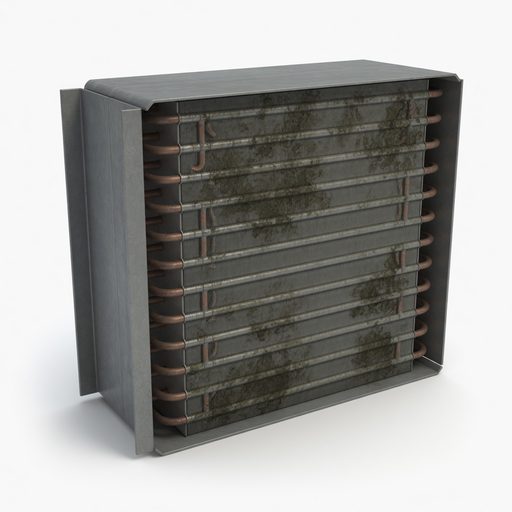
Natural gas is odorless, so utilities add mercaptan (a sulfur compound that smells like rotten eggs) so leaks can be detected. If there's a gas leak near your furnace, water heater, or gas line, the AC air intake can pull this gas into the ductwork and distribute it throughout the house.
Mice, rats, birds, and squirrels occasionally enter ductwork, air handlers, or the space around the furnace and die. The decomposition produces hydrogen sulfide and other sulfur compounds that smell like rotten eggs. The smell is distributed through the duct system when the AC runs.
If a condensate drain's P-trap has dried out or the drain connects to the sewer system without a proper trap, sewer gas (containing hydrogen sulfide) can be pulled into the air handler and distributed through the ducts.
Overheating capacitors, contactors, and wiring insulation in the air handler can produce sulfur-like or rotten egg odors as they degrade. Some capacitor electrolytes contain sulfur compounds that release when the component fails.
If you have well water and a humidifier connected to the HVAC system, hydrogen sulfide in the water can evaporate into the air stream. This is more common in areas with sulfur-rich groundwater.
How to Fix It
Rule Out Gas Leak FIRST
$0This is the priority — it's a safety issue.
- 1Do NOT turn on/off any electrical switches or light flames.
- 2If the smell is strong and you suspect gas: leave the house immediately. Call your gas utility's emergency line from outside.
- 3If mild: check the area around your furnace, water heater, and gas lines for a hissing sound or stronger smell.
- 4A gas company inspection is free. They use electronic detectors far more sensitive than your nose.
- 5Gas leaks are the most dangerous possibility — always rule this out first.
Locate and Remove Dead Animal
$0-300If the smell has a decomposing quality, not pure sulfur.
- 1Identify which vent has the strongest smell — the animal is likely in that duct run or nearby.
- 2Check the air handler cabinet, blower area, and the space around the furnace — animals often die near the warm equipment.
- 3For accessible ductwork: remove vent registers and look inside with a flashlight.
- 4For inaccessible ductwork: an HVAC technician ($100-300) can use a camera to locate and remove the animal.
- 5After removal, run the AC with windows open. The residual smell dissipates in 1-3 days.
Check Condensate Drain Trap
$0-20If the smell seems to come from the air handler itself.
- 1Locate the condensate drain line near the indoor unit.
- 2Pour a cup of water into the drain pan to refill any dried P-trap.
- 3Add a capful of bleach to the drain pan to kill bacteria.
- 4If the drain connects to a floor drain: ensure that floor drain's trap is also full of water.
Inspect Electrical Components
$100-300If the smell coincides with operation and performance issues.
- 1Turn off the system and call an HVAC technician.
- 2A failing capacitor or contactor can be identified by visual inspection — look for bulging, leaking, or discoloration.
- 3Component replacement: $100-300 including labor.
- 4Do not operate the system if you suspect electrical failure — it can damage the compressor.
When to Call a Professional
Rotten egg smell from all vents — treat as a gas leak until proven otherwise. Leave the house and call your gas company.
Rotten egg smell + hissing sound near gas appliances — gas leak confirmed. Evacuate immediately. Do not use light switches.
Rotten egg smell + burning smell — possible electrical failure in the air handler. Turn off the system at the breaker.
Rotten egg smell getting progressively worse over days — likely a dead animal. The smell will peak at 7-10 days then gradually fade over 2-4 weeks. Removal speeds this up dramatically.
Do NOT try to mask the smell with air freshener if you haven't ruled out gas — this could allow a dangerous gas buildup to go undetected.
How to Prevent It
Install a natural gas detector ($25-50) near your furnace and water heater.
Seal duct openings and gaps to prevent animals from entering ductwork.
Annual HVAC maintenance includes checking electrical components and condensate drains.
Pour water down the condensate drain monthly to keep the trap sealed.
Screen exterior vents and returns to prevent animal entry.
Why Rotten Egg Smell Demands Immediate Attention
Hydrogen sulfide (H₂S) — the primary component of the 'rotten egg' smell — is dangerous at elevated concentrations. Detectable at just 0.5 ppm, it becomes an irritant at 10-20 ppm and can cause loss of consciousness at 300+ ppm. Mercaptan (added to natural gas) is even more potent — detectable at parts per billion.
Natural gas (methane) itself is odorless, colorless, and explosive at 5-15% concentration in air. A small leak near an AC air intake can distribute the gas-laden air throughout the house, potentially reaching dangerous concentrations in rooms far from the actual leak. This is why a rotten egg smell from your AC should always be treated as a gas leak until proven otherwise — the distribution through ductwork can mask the true location of the leak and spread the risk to every room.
If the cause is a dead animal, the smell follows a predictable curve: increasing over 3-7 days, peaking at 7-14 days, then gradually decreasing over 2-4 weeks as the decomposition completes. The smell can be severe at peak — enough to make rooms unusable. Removal of the carcass and cleaning of the affected area immediately resolves the issue.
Frequently Asked Questions
If the smell is strong and could be gas: yes, leave immediately and call your gas company from outside. If you've confirmed it's not gas (gas company checked), it's unpleasant but not dangerous to stay.
Without removal: 2-4 weeks for the worst of it, with residual smell for 1-2 months. With removal: the remaining odor dissipates in 1-3 days.
Yes — some electrolytic capacitors contain sulfur-based compounds. When they fail, they can leak or off-gas these compounds. The smell is usually accompanied by a buzzing noise and reduced cooling performance.
This is often a condensate drain issue — bacteria in stagnant water produce H₂S that accumulates while the system is off. When it kicks on, it pushes this air through the vents. Cleaning the drain pan and adding bleach usually resolves it.
At the low concentrations from dead animals or drain issues, the smell is unpleasant but unlikely to cause illness beyond headaches and nausea. However, if the source is a gas leak, the methane buildup is the real danger — explosive and asphyxiating at high concentrations.