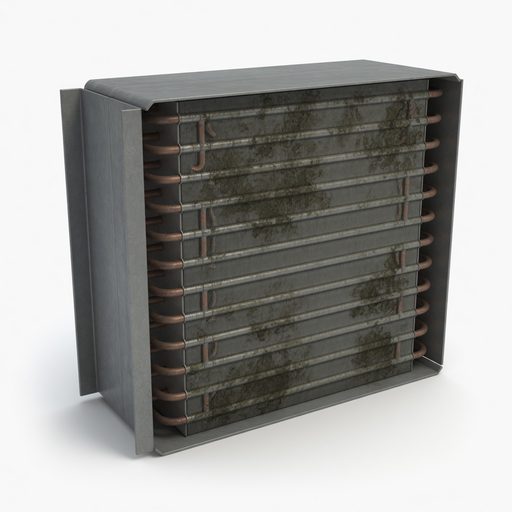
Does this match what you’re noticing?
“Outdoor unit hums or buzzes but the fan does not spin, or the AC starts slowly and short-cycles”
Most Likely Causes (Ranked)
The run capacitor and contactor in the outdoor unit switch and start the compressor and fan under heavy electrical load. When a capacitor overheats or short-circuits, it strains the motors it serves and nearby wires and windings can overheat and burn, producing a strong, unpleasant odor1. A failing capacitor or scorched relay gives off a sharp, acrid, plastic-like or fishy electrical smell, and a gunpowder smell is the signature of something that has short-circuited inside the unit514. This Old House lists smoke or a burning odor from the outdoor unit as a sign of capacitor failure, and most capacitors last only 10 to 20 years6. In cooling mode this is one of the two most likely explanations for a true burning smell.
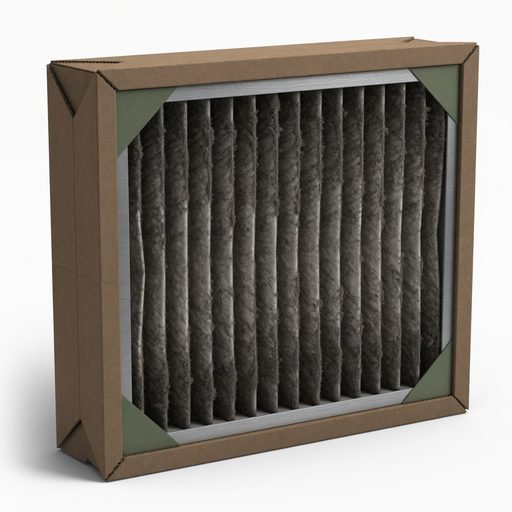
The blower motor is designed to move a set volume of air across itself and the coil. A dirty, clogged filter restricts airflow, so the motor runs hotter and longer than designed, and the system can overheat and give off a burnt smell15. On a window unit, dirty filters and dusty condenser coils restrict airflow the same way13. This is the cheapest cause to rule out: pull the filter and look at it. If the filter is clean and the smell continues, the motor itself is the next suspect2.
This is the most common burning smell in HVAC, but it belongs to heating mode, not cooling. Dust settles on the furnace heat exchanger, the blower, and the electric heat strips while the equipment sits idle, and the first time it heats up that dust burns off and smells like burning dust or plastic135. Trane says to run the unit about 10 minutes; if the smell diminishes or vanishes, you are likely in the clear3. PickHVAC puts normal burn-off at 30 to 60 minutes5. A brand-new furnace can also give off a chemical, burning-plastic odor for the first few hours of use3. If your AC is in cooling mode and has been running regularly, dust burn-off is an unlikely explanation; if it is the first heat of fall, bump this to the top of the list.
Blower and condenser fan motors run on bearings. When bearings wear out, the motor overheats and produces a burning smell12. On older belt-drive blowers, a slipping or frayed belt creates friction that overheats and burns the rubber1. Worn motor windings or arcing contacts can also create a metallic or ozone-like odor5. HVAC.com notes that if the filter is clean and the smell persists, lubricating the bearings often eliminates it; if not, the motor is on its way out2.
Loose connections, frayed wiring, or a short circuit let current arc or heat up a connection until wire insulation melts, which smells like burning plastic or sulfur25. HVAC.com warns this may signal a serious electrical problem that requires immediate attention, and Trane says a burning electrical odor from the system could indicate a severe electrical problem13. On a window unit, a frayed or pinched power cord, loose terminals, or wiring touching bare metal can create a short, and running the unit on a shared or overloaded circuit makes it worse13. ESFI lists burning smells, discolored switches, and warm outlets as signs of a serious wiring problem12.
Heat pumps use electric resistance heat strips for auxiliary heat. Dust and debris that land on the strips during the cooling months burn off when the strips first energize, and anything larger than dust, such as a toy or paper that fell into a register, will scorch and smell35. Trane says if you can trace the smell to one room, check that vent and remove the object if you can do so safely3. Visible scorching or smoke from the strips or wiring harness is a repair job, not a cleaning job5. This cause only applies when the system is in heating mode.
How to Fix It
Shut it down and sort dust smell from electrical smell
$0This is the first move for any burning smell and the only test you need for first-of-season dust.
- 1Set the thermostat to Off. If the smell is sharp, acrid, fishy, like gunpowder or melting plastic, or you see smoke, also switch off the dedicated HVAC breaker or pull the outdoor disconnect, and unplug a window unit513.
- 2If you see smoke or flames, leave and call the fire department; do not go back to the unit until it is safe514.
- 3If the smell is dusty and it is the first heating cycle of the season, open windows and run the heat for about 10 minutes. If the smell fades or disappears, you are likely in the clear3. PickHVAC allows up to 30-60 minutes for burn-off5.
- 4If the smell persists or gets stronger, turn the system off again and keep it off until an HVAC technician has cleared it; Trane says a burning smell lasting over an hour warrants a professional35.
- 5Do not open the outdoor unit's electrical panel or touch the capacitor or contactor. Those parts hold a charge even with power off and are for a technician.
Check and replace the air filter
Parts onlyA clogged filter is the cheapest and most common fixable cause of an overheating blower.
- 1Turn the system off at the thermostat before pulling the filter.
- 2Slide out the filter at the return grille or the air handler and look through it. If you cannot see light through it, it is restricting airflow and overheating the system1.
- 3Install a new filter of the same size with the airflow arrow pointing toward the blower.
- 4Run the system and give it 30 minutes. If the burning smell is gone, change filters on schedule going forward. If it remains with a clean filter, the blower motor or its bearings are the next suspect2.
Window unit: unplug, inspect the cord, and clean the filter and coils
$0Window and through-wall units have an exposed power cord and small filters that clog fast.
- 1Unplug the unit, or switch off its breaker, before any inspection or cleaning13.
- 2Look at the plug and cord for fraying, burn marks, pinching, or melted spots. A damaged cord or plug means the unit is done until it is repaired or replaced13.
- 3Pull the front grille and wash or replace the filter; brush or vacuum dust off the coils to restore airflow13.
- 4Make sure the AC is the only appliance on its circuit and that it is plugged directly into the wall, not an extension cord or power strip1213.
- 5If the burning smell returns after cleaning, stop using the unit and have it serviced or replaced; smoke or a burning smell from a window AC is a clear sign of a serious problem13.
Have a pro replace the failed capacitor, contactor, or motor
$80-$400Electrical components inside the condenser and air handler are not a homeowner job.
- 1Leave the system off at the breaker and tell the dispatcher you have a burning or electrical smell so they prioritize the call.
- 2Expect a diagnostic fee of roughly $75-$250, often credited toward the repair8.
- 3A capacitor swap runs $80-$400 total with the part itself only $8-$45; most of the cost is the service call6. A contactor runs $190-$250 installed, about $220 on average9.
- 4A blower motor replacement averages $560 with a normal range of $300-$900; variable-speed ECM motors cost more than standard PSC motors11.
- 5Ask the tech to check the wiring harness, breaker, and disconnect for heat damage while the panel is open, since a cooked capacitor often scorches neighboring wires1.
When to Call a Professional
You see smoke, sparks, or flames: shut off at the thermostat and breaker and call the fire department, then an HVAC pro514.
The smell is still there after 30-60 minutes, or after the first heating cycle, or lasts over an hour despite troubleshooting35.
You can see melted or discolored plastic, scorched wire insulation, or discoloration and corrosion around the contactor or on the plug and cord91213.
How to Prevent It
Change or clean the air filter on schedule; restricted airflow is a top cause of an overheating blower and burnt smells113.
Get an annual tune-up so a tech can check the capacitor, contactor, motor bearings, and wiring before the season; most capacitors last 10-20 years and some start failing at 106.
Before the first heat of the season, vacuum dust from around the furnace or air handler and run the heat for a short cycle with windows open so the dust burn-off happens on your terms35.
Plug a window unit directly into a wall outlet on its own circuit, never into an extension cord or power strip, and check the cord each spring for damage1213.
Keep the outdoor condenser clear of leaves, grass clippings, and debris so the fan motor and compressor are not working against blocked airflow1.
Frequently Asked Questions
Only in heating mode. The first time a furnace or heat-pump heat strips fire for the season, dust that settled over the summer burns off and smells like burning dust or plastic for about 10 to 60 minutes135. An AC running in cooling mode has no heating element, so a burning smell there is not normal and usually means a filter, motor, or electrical component is overheating15.
A gunpowder smell means something in the unit has short-circuited14. The usual culprits are a failed capacitor, a scorched relay or contactor, or arcing contacts, which produce a sharp, acrid, sometimes fishy electrical odor5. Turn the system off at the thermostat and breaker and do not run it again until a technician has inspected it45.
A plastic or sulfur odor usually means wiring or other electrical components are overheating and melting insulation25. Overheating motor windings, a failing capacitor, and a clogged filter that is cooking the blower can all produce it15. A brand-new furnace can also give off a burning-plastic chemical smell for its first few hours of use, which should fade3.
Yes, for anything other than a brief dust smell. Carrier says you should turn off your AC if it smells burning, because it may be an electrical problem posing a fire hazard4. Set the thermostat to Off, then cut power at the dedicated HVAC breaker or outdoor disconnect, and open windows5. For a window unit, unplug it or switch off its breaker13.
It depends on the part. A capacitor replacement typically runs $80-$400 total, with an average around $17567. A contactor runs $190-$250 installed9. A blower motor averages $560 and typically $300-$900, with some installs reaching $450-$2,000 for premium or variable-speed motors811. Small electrical repairs such as wiring fixes often run $150-$400, plus a diagnostic fee of $75-$2508.
Unplug it right away, or switch off its breaker13. Check the cord and plug for fraying, burn marks, or melting, then clean the filter and brush dust off the coils, since restricted airflow overheats the fan motor13. Make sure it is plugged directly into the wall on its own circuit1213. If the smell comes back after cleaning, or the cord is damaged, stop using the unit and have it repaired or replaced13.
Sources
Every factual claim above comes from one of these. Updated November 2026.
- What Does an AC Burning Smell Mean? — HVAC.com
- What Stinks? Identifying Common AC Smells — HVAC.com
- Does Your Heat Smell Like It's Burning? — Trane
- Why Does My AC Smell? — Carrier
- Heat Pump Smells Like Burning: Causes, Safety Steps, and Fixes — PickHVAC
- AC Capacitor Cost — This Old House
- AC Capacitor Replacement Cost for Residential Systems 2026 — PickHVAC
- AC Repair Cost: Understanding Common Issues and When to Replace — Fixr
- How Much Does an AC Contactor Replacement Cost? — Angi
- AC Electrical Parts Replacement Cost: Contactor, Relay, Control Board and Transformer 2026 — PickHVAC
- How Much Does an HVAC Blower Motor Replacement Cost? — HomeAdvisor
- Electrical Warning Signs — Electrical Safety Foundation International (ESFI)
- Smoke or Burning Smell Coming From Window Air Conditioner: What It Means and How to Fix It — AppliancePartsPros
- AC Smelling Funny? Here Are 5 AC Smells and What They Mean — Service Champions
Cite or link to this guide
Citation (APA)
Link (HTML)
Free to quote with a link back. Writers, teachers and landlords: the chart at Smells You Should Never Ignore is free to embed.
Related smells
Other guides in Home & House and smells that share a cause.